
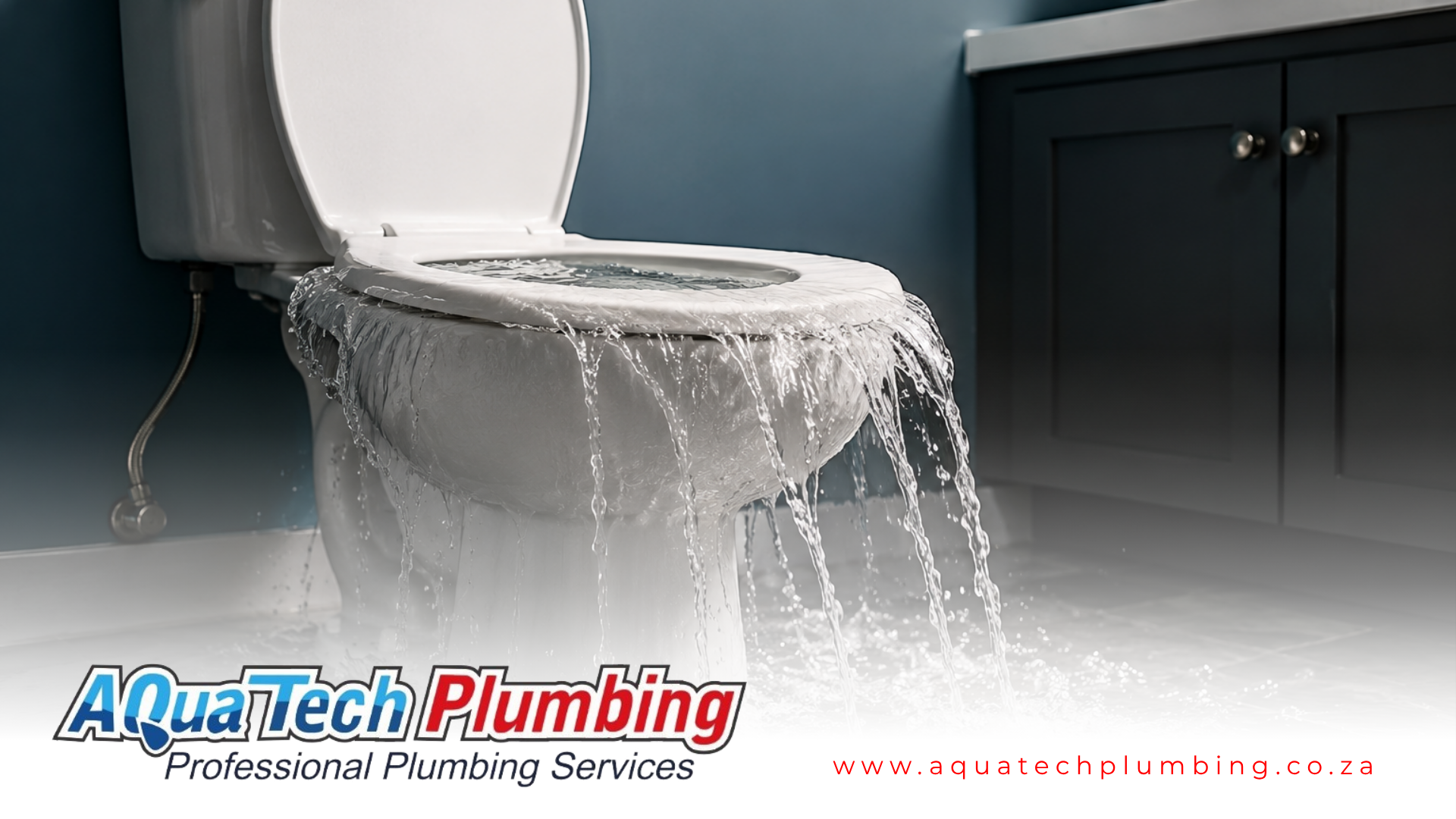
An overflowing toilet is one of the most stressful plumbing emergencies a homeowner can face. Besides the obvious mess, toilet overflows can cause water damage, create health risks, and indicate a more serious drainage problem hidden within your plumbing system.
If your toilet keeps overflowing, the good news is that many causes can be identified quickly. The key is knowing what to do safely and when it’s time to call a professional plumber.
In this guide, we’ll explain the most common reasons toilets overflow, how to stop the problem safely, and what South African plumbing regulations say about drainage systems and maintenance.
Why Does a Toilet Overflow?
A toilet overflows when water cannot move through the drainage system fast enough. Instead of flowing into the sewer line, water rises in the bowl and spills onto the floor.
The most common causes include:
1. A Blocked Toilet Trap
The trap is the curved section built into the toilet that holds water and prevents sewer gases from entering your home.
Common blockages include:
- Excessive toilet paper
- Wet wipes labelled “flushable”
- Children’s toys
- Sanitary products
- Paper towels
- Foreign objects accidentally dropped into the bowl
A blockage in the trap typically causes immediate overflow during flushing.
2. A Blocked Drain Line
If multiple toilets, showers, or sinks are draining slowly, the problem may be deeper in the drainage system.
Signs of a blocked sewer line include:
- Gurgling sounds from toilets
- Water backing up into showers
- Slow-draining fixtures
- Bad odours from drains
- Repeated toilet overflows
Drainage systems must be designed to carry wastewater safely and prevent health hazards. South African building regulations require drainage installations to be capable of handling the expected hydraulic load while remaining accessible for inspection and maintenance.
3. Ventilation Problems
Your drainage system relies on proper venting to allow air into the pipes. When vents become blocked by debris, nests, or other obstructions, pressure imbalances can develop.
Common symptoms include:
- Bubbling toilets
- Gurgling sounds after flushing
- Water levels changing unexpectedly
- Frequent drainage issues
Drainage standards in South Africa include provisions for proper venting to maintain effective flow and protect trap seals.
4. Septic Tank or Municipal Sewer Issues
For properties using septic systems, a full or poorly maintained tank can cause wastewater to back up into the home.
Municipal sewer blockages can also create overflows, especially during heavy rainfall or when obstructions occur in shared sewer lines.
What To Do Immediately When Your Toilet Starts Overflowing
Step 1: Stop the Water Supply
Remove the cistern lid and lift the float if water is still flowing.
If that doesn’t stop the water, turn off the isolation valve located behind the toilet.
This prevents additional water from entering the bowl.
Step 2: Avoid Flushing Again
Many homeowners make the mistake of flushing repeatedly.
If a blockage exists, every flush increases the risk of flooding and property damage.
Step 3: Protect Yourself
Overflowing toilet water may contain harmful bacteria and contaminants.
Wear:
- Rubber gloves
- Closed shoes
- Eye protection if splashing is possible
Avoid direct contact with contaminated water whenever possible.
Step 4: Remove Excess Water
Use towels, a mop, or a wet vacuum to prevent water from spreading into surrounding flooring and walls.
The quicker standing water is removed, the lower the risk of permanent damage.
Safe DIY Fixes You Can Try
Use a Toilet Plunger
A flange plunger is specifically designed for toilets.
To use it correctly:
- Ensure enough water covers the plunger head.
- Create a firm seal over the drain opening.
- Push and pull steadily for 15–20 seconds.
- Test with a small amount of water.
Avoid aggressive plunging, which can damage seals or cause contaminated water to splash.
Try a Toilet Auger
A toilet auger is designed to clear blockages further into the trap without scratching the porcelain.
This is often effective for:
- Compact paper blockages
- Small foreign objects
- Partial obstructions
Avoid Chemical Drain Cleaners
Many chemical cleaners can:
- Damage plumbing components
- Harm toilet seals
- Create safety risks for occupants
- Complicate professional repairs
Professional plumbers generally recommend mechanical clearing methods instead.
When You Need a Professional Plumber
Contact a licensed plumber immediately if:
- The toilet overflows repeatedly
- Multiple drains are affected
- Sewage backs up into fixtures
- You notice strong sewer smells
- DIY methods fail
- Water appears around inspection points or external drains
Recurring overflows often indicate a deeper drainage issue that requires specialist equipment such as CCTV drain inspections or high-pressure jetting.
South African Plumbing Compliance: Why It Matters
Many homeowners don’t realise that drainage systems are regulated under South African building and plumbing standards.
Drainage installations must be designed to:
- Prevent health hazards
- Remain watertight
- Allow inspection and maintenance access
- Safely discharge wastewater
- Comply with applicable building regulations and SANS standards.
Municipal by-laws also require property owners to address drainage blockages promptly. In many municipalities, drainage systems must comply with SANS 10252 requirements, and blockages should be cleared under the supervision of a qualified plumber.
Attempting major DIY sewer repairs can create compliance issues and may result in more costly repairs later.
How to Prevent Future Toilet Overflows
A few simple habits can significantly reduce the risk of overflow:
Only Flush the Three Ps
Flush only:
- Pee
- Poo
- Toilet paper
Everything else belongs in the bin.
Schedule Drain Inspections
Regular inspections can identify:
- Root intrusion
- Pipe damage
- Partial blockages
- Ventilation issues
Before they become emergencies.
Watch for Early Warning Signs
Call a plumber if you notice:
- Slow flushing
- Gurgling drains
- Rising water levels
- Frequent plunging requirements
Addressing problems early is usually far less expensive than dealing with an overflowing toilet and water damage.
Need Help With an Overflowing Toilet?
An overflowing toilet can quickly turn into a major plumbing emergency. Whether you’re dealing with a simple blockage, a recurring overflow, or a suspected sewer line problem, professional diagnosis is the fastest way to prevent further damage.
At Aqua Tech Plumbing, our experienced plumbers provide fast, reliable toilet repairs, blocked drain clearing, CCTV drain inspections, and emergency plumbing services across South Africa. We identify the root cause of the problem and provide lasting solutions that comply with South African plumbing standards.
Don’t wait for a minor blockage to become a major disaster. Contact Aqua Tech Plumbing today for expert assistance with overflowing toilets and blocked drains.


0 Comments